Start here
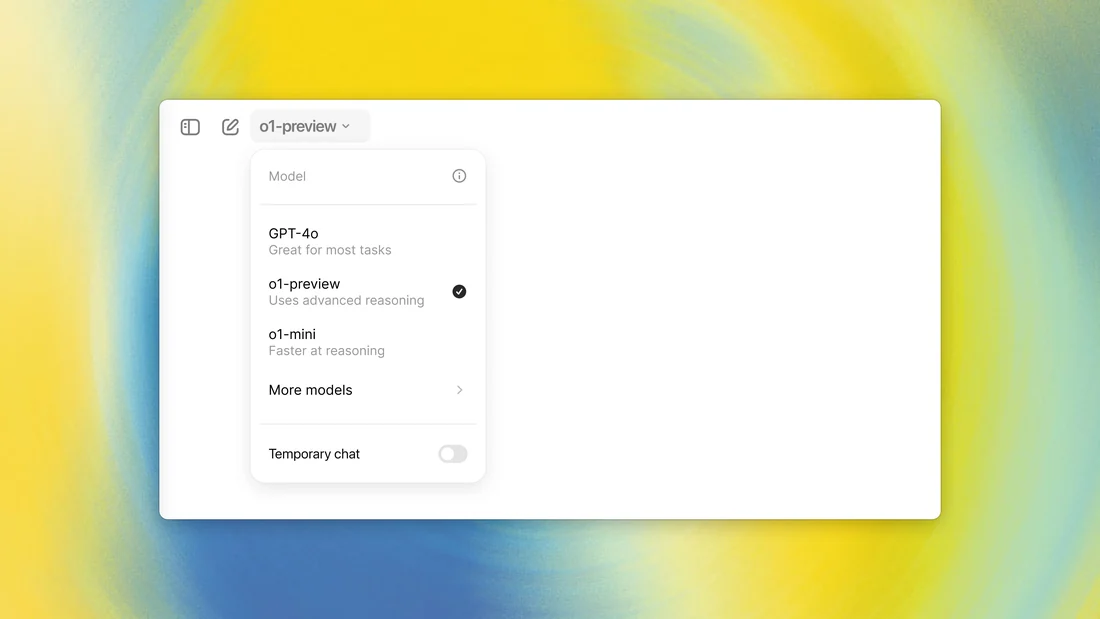
Ask a hard math or logic problem and some assistants now visibly pause, working through steps before giving a final answer, instead of producing the first fluent-sounding response. OpenAI introduced this kind of model publicly on 12 September 2024, describing it as designed to spend more time thinking through problems before responding, much like a person would, in the announcement of o1-preview. The trade is extra time and cost for a harder, more reliable answer, and vendors now document that trade explicitly.
What the documents say
OpenAI's launch post reports gains on hard benchmarks: on a qualifying exam for the International Mathematics Olympiad, it states, GPT-4o solved only 13 percent of problems, while the reasoning model scored 83 percent. The post is candid about a cost beyond compute: for many common cases, GPT-4o will be more capable in the near term, and the new model launched without web browsing or file uploads. Anthropic's extended thinking documentation makes the mechanism configurable, letting a developer set a token budget and stating that higher budgets enable more comprehensive reasoning, with diminishing returns and increased latency; it also documents that fixed manual budgets are being phased out on newer models in favor of a mode that decides on its own whether to think. Google's Gemini thinking documentation states plainly that its models engage in dynamic thinking by default, adjusting effort to a request's complexity, and that billed cost is the sum of output and thinking tokens, so reasoning is metered, not free.
Check this
A reader deciding whether a task needs a reasoning model can apply the distinction the documents draw: benchmark gains concentrated in math, coding, and multi-step logic, not general knowledge or everyday writing. Someone using a product built on these models can check whether it exposes a thinking-effort setting at all, since Google's and Anthropic's documentation both describe automatic adjustment as the default, meaning a slow or expensive response may reflect a decision the interface never surfaces.
What holds and what fails
The claim that extra thinking time improves performance on hard problems holds according to the benchmark figures the vendors publish, and it is worth naming these as the vendors' own reported numbers, not an independent test. It fails, by OpenAI's own admission, on the many common cases a faster model already handled well, where the extra latency buys little. The way a developer controls this trade-off is also unstable: Anthropic's documentation shows a manual budget setting already being replaced by an automatic one, so instructions for tuning thinking on one model version can be obsolete on the next.
- Reserve reasoning-mode requests for math, coding, or multi-step logic tasks rather than routine writing.
- Expect longer waits and higher cost from a model that reports spending time thinking, and budget for it.
- Check current documentation for the exact model in use, since thinking controls have already changed across versions.
Thinking time is a documented trade, not a marketing flourish: slower and pricier for a better shot at problems that reward working through steps. The vendors' own benchmark tables and cost pages are where that trade is actually specified.
Sources & reading trail
Announces o1-preview on 12 September 2024, states it was trained to spend more time thinking before responding, and reports benchmark gains such as 83% versus 13% on a qualifying IMO exam.
Source published: 12 September 2024 · Retrieved: 16 September 2026
States how a developer sets a thinking token budget, that higher budgets trade latency for more thorough reasoning, and that manual budgets are deprecated or rejected on Claude's newest models in favor of adaptive thinking.
Source published: Not established · Retrieved: 16 September 2026
States that thinking tokens are billed alongside output tokens, that Gemini adjusts reasoning effort automatically by default, and gives guidance on when higher thinking levels are worth the cost.
Source published: Not established · Retrieved: 16 September 2026
Documentation, regulator guidance and studies establish the record; the checks and the boundary are AI Use Field Guide editorial analysis. This retrospective draft does not imply the site published on the event date.